

News
Decanter Centrifuge for Oily Sludge Dewatering
Time:
2026-08-05
Decanter Centrifuge for Oily Sludge Dewatering
Oily sludge can be generated during tank cleaning, crude-oil handling, drilling operations, and oilfield wastewater treatment. It is usually a complex mixture of oil, water, fine solids, sand, and residual chemicals rather than a uniform sludge. Materials from different sources can vary widely in water content, oil content, particle size, viscosity, and emulsion stability. Equipment should therefore be selected from actual material data instead of the sludge name alone.
The basic purpose of dewatering and volume reduction is to reduce the amount of wet sludge sent for transport or final treatment while recovering liquid or oil phases where practical. A decanter centrifuge offers continuous feeding, continuous solids discharge, and centrifugal separation, making it a useful unit in oily sludge pretreatment and solid-liquid separation. It is not a stand-alone universal solution. Performance depends on feed characteristics, pretreatment, differential speed, pond depth, chemical conditioning, and coordination with downstream oil-water separation.

How a Decanter Centrifuge Fits into Oily Sludge Treatment
Feed equalization and pretreatment
Before the feed reaches the centrifuge, it may pass through collection, coarse screening, mixing, equalization, or heating and conditioning. High-viscosity, strongly emulsified, or debris-laden material may need pretreatment to improve pumpability, prevent plugging, and stabilize the feed. Thermal washing, demulsification, or flocculation should be selected from sample analysis and bench or pilot testing rather than applied as a fixed recipe.
Continuous solid-liquid separation
Inside the rotating bowl, centrifugal force moves solid particles toward the bowl wall. The scroll conveys the settled solids toward the solids discharge, while the liquid phase exits through the liquid outlet. Differential speed, feed rate, pond depth, and chemical conditioning can be adjusted to find a practical balance between cake dryness, liquid clarity, throughput, and energy use.

Choosing a two-phase or three-phase arrangement
If the main objective is to remove solids and produce a cleaner liquid stream, a two-phase solid-liquid decanter may be suitable. If the liquid contains oil and water phases with different densities that need to be separated, the process may use a three-phase decanter or combine a two-phase decanter with a disc separator or another oil-water separation unit. ANDRITZ describes a three-phase decanter configuration for applications that require solid-liquid separation while also handling two liquid phases of different densities. The correct arrangement should therefore follow the feed phases and recovery objectives.
Selection Priorities for an Oily Sludge Dewatering System
First, characterize the feed. Important parameters include water content, oil content, solids concentration, particle-size distribution, viscosity, temperature, emulsion stability, and corrosivity. Multiple samples may be needed where the sludge source changes over time.

Second, define the destination of each product stream. The intended handling or reuse of recovered oil, water, and solids determines the separation target, the need for solids washing, the use of a three-phase unit, and downstream storage and transport. Targets should be expressed as measurable and verifiable criteria rather than broad claims such as “complete harmless treatment” or “total recovery.”
Third, check wear, corrosion, and safety requirements. Sand and hard particles can wear the bowl and scroll, while salts and chemicals may create corrosion risks. Materials of construction, wear protection, seals, bearings, torque protection, and hazardous-area requirements should be confirmed through project engineering. Where flammable gases may be present, the site safety and electrical teams must confirm the applicable configuration; a generic certification claim should not be assumed.
Fourth, plan control and maintenance. Differential speed, feed rate, torque, vibration, temperature, and level should be monitored. Abnormal conditions call for load reduction or inspection. Routine maintenance includes checking wear parts, scroll flights, seals, lubrication, solids discharge, and flushing systems. Stable pretreatment, continuous solids discharge, and an appropriate cleaning program help reduce plugging and unplanned downtime.
A Flexible Process Arrangement
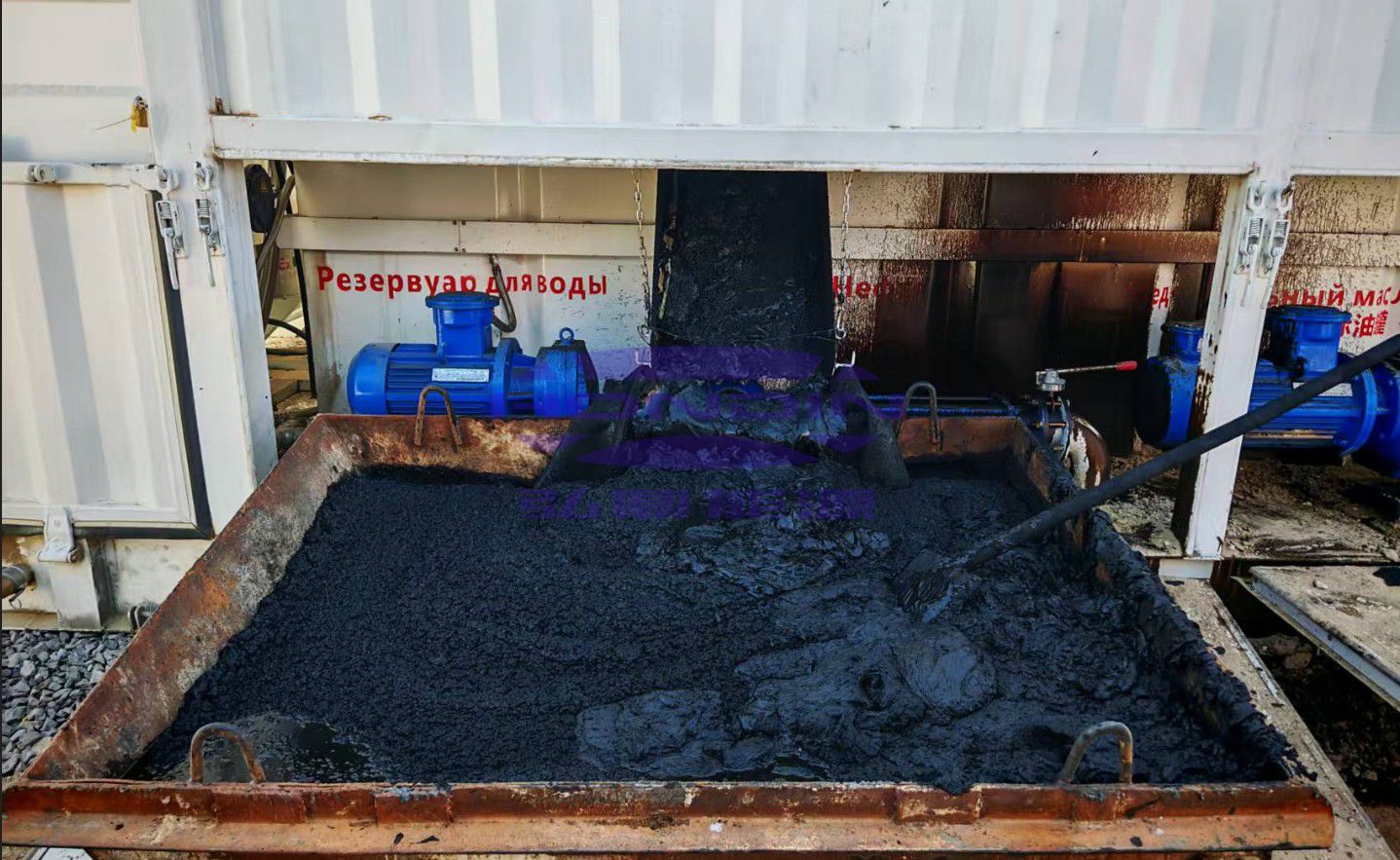
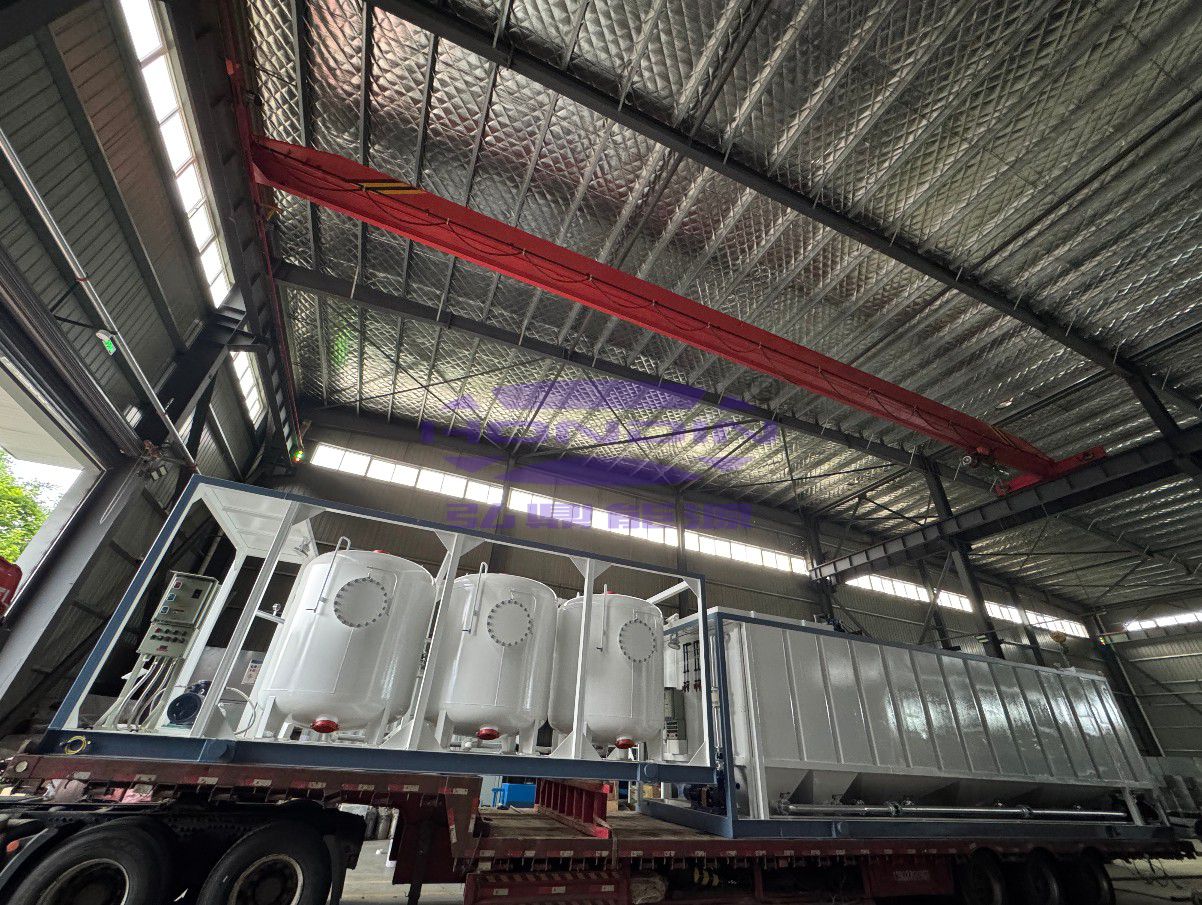
A practical oily sludge treatment train may include sludge reception and storage, coarse screening, heating and conditioning, chemical mixing, decanter centrifuge solid-liquid separation, fine oil-water separation, and downstream solids handling. GN's oily sludge system description presents a sequence combining heating and conditioning, coarse screening, centrifuge solid-liquid separation, and later three-phase separation. Actual process conditions still require validation against the customer's sludge analysis and product-quality objectives.
When the system is designed around reducing wet-sludge volume, recovering useful liquid phases, limiting plugging, and supporting continuous operation, the decanter centrifuge can become an important unit in an oily sludge treatment system. A capable supplier should support the project from sample testing and process selection through equipment configuration and commissioning, while clearly distinguishing test results, design targets, and final operating data.








Hot News
-

Vertical Cuttings Dryer for Drilling Waste Management
-
Desander vs Desilter Selection for Solids Control
-
Surface Blending and Pumping Systems for Well Stimulation
-
Produced Water Pretreatment for Reinjection and Reuse
-
Vacuum Degasser Role in Drilling Fluid Solids Control
-
Decanter Centrifuge for Oily Sludge Dewatering
-
Solids Separation in Frac Flowback Fluid Pretreatment
-
Shale Shaker Screen Selection and Maintenance Guide
-
Three-Phase Separation in Oily Sludge Treatment Systems
-
Fracturing Flowback Fluid Treatment for Oilfield Water Reuse
-
The Role of a Decanter Centrifuge in a Solids Control System
-
Fracturing flowback fluid treatment equipment shipment: What customers really need is problem-solving capability.




Add: No.462 Jinggao South Road, Gaoling District, Xi'an, Shaanxi Province, China
Mob/WhatsApp: +86 186 2931 2932/ +86 187 2900 8271
E-mail: sales@hondinchina.com

Follow us:

点击右上角
分享给朋友吧
点击右上角
分享给朋友吧
Copyright © Xi'an Hondin Energy Technology Co., Ltd. All rights reserved
Copyright © Xi'an Hondin Energy Technology Co., Ltd. All rights reserved