

News
Shale Shaker Screen Selection and Maintenance Guide
Time:
2026-07-27
When drilling fluid returns from the well, it carries drilled cuttings and other solids with a wide range of particle sizes. A shale shaker uses vibratory screening to allow drilling fluid and finer particles to pass through the screen while transporting larger cuttings to the discharge end. As the first major separation unit in a solids control system, the shaker influences the load placed on desanders, desilters, centrifuges, and mud tanks.
Good screening does not mean choosing the finest possible screen in every situation. Screen selection must balance separation performance, processing capacity, drilling fluid loss, and service life. A U.S. EPA drilling-fluid technical document describes solids control as a staged process that removes larger cuttings and then finer solids so the active drilling fluid can retain its required properties. The IOGP drilling waste management review also notes that screen selection depends on shaker design, circulation rate, fluid properties, hole size, and rate of penetration. These factors should be assessed together.
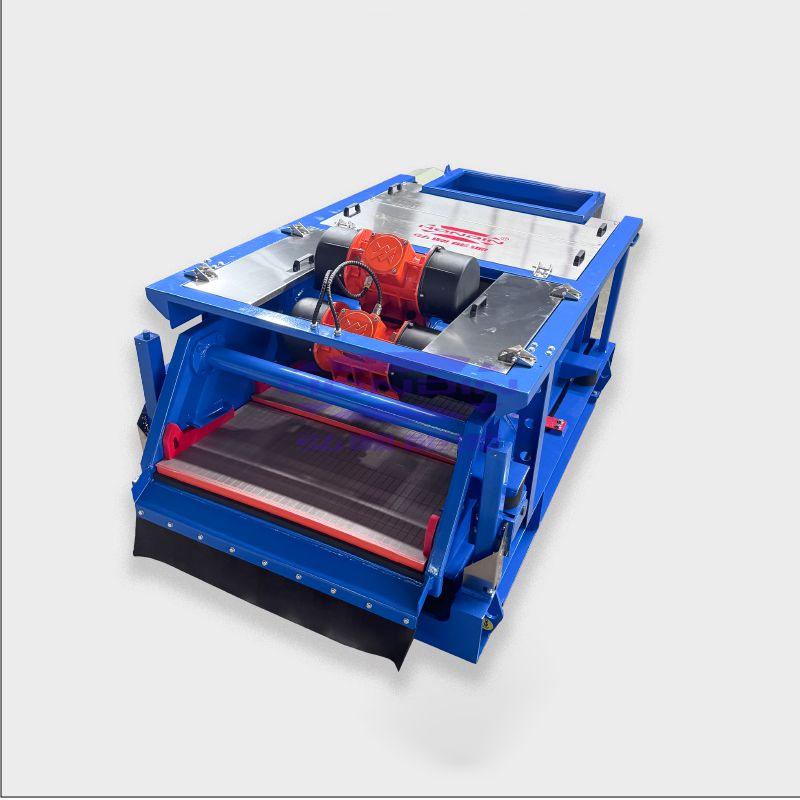
Key Factors in Screen Selection
Confirm the shaker and screen design
Shale shakers differ in basket dimensions, support arrangements, tensioning systems, and effective screening area. When ordering a shaker screen, check the panel dimensions, installation method, tensioning hardware, support layout, and screen type in addition to mesh or API 13C/ISO 13501-related classification. A mesh number alone cannot describe the complete separation behavior of a screen.
Match the screen to the drilling section and mud system
Large-hole sections, coarse cuttings, or high circulation rates may require a configuration that prioritizes throughput and continuous solids transport. In sections where low drilled-solids content is more important, a finer practical screening arrangement may be considered if the shaker can handle the resulting load. Water-based, oil-based, and synthetic-based drilling fluids also behave differently because viscosity, sand content, colloidal solids, and temperature affect screen performance.

Read the screen bed during operation
Operators should check whether the fluid is distributed evenly across the screen, whether solids accumulate in one area, and whether the shaker shows blinding, excessive mud carryover, or wet cuttings discharge. An overly fine screen can reduce capacity and blind more easily; an overly coarse screen can pass too much drilled solids to downstream equipment. Screen decisions should therefore be connected with mud-property measurements, cuttings appearance, fluid loss, and the loading of downstream units.
Installation and Maintenance Practices
Before installation, inspect the screen frame, support strips, rubber components, tensioning parts, and screen cloth. Install and tension each panel according to the shaker manufacturer's procedure. During initial operation, check for loose panels, uneven vibration, abnormal wear, and leakage. A cracked, damaged, or poorly tensioned panel should be replaced promptly so that cuttings do not bypass the primary separation stage.
Screen cleaning should be selected according to the drilling-fluid system and screen material. Avoid tools or methods that can damage the mesh or seals. During planned maintenance, inspect the vibration motors, springs, support structure, liquid collection area, and cuttings discharge path. A working site should also keep compatible spare screens available and record replacement dates, drilling conditions, blinding events, and screen life. This operating history is valuable for later screen selection.

Integrating Screens into the Solids Control System
A screen is not an isolated consumable. Its performance should be coordinated with the mud tanks, centrifugal pumps, desander, desilter, mud cleaner, and decanter centrifuge. Before finalizing a solids control package, define the drilling-fluid system, expected solids type, circulation rate, changes between hole sections, and cuttings handling route. A suitable primary separation stage can reduce wear and overload in downstream equipment and support more stable drilling-fluid recovery.
For projects with long operating periods or frequent changes in drilling conditions, sample testing before mobilization is worthwhile. Separation performance, fluid loss, throughput, maintenance convenience, and screen service life should be evaluated together. An experienced solids control supplier can use drilling-fluid samples and field conditions to support a more practical screen and shaker configuration.








Hot News
-

Chemical Hot Washing for Oily Sludge: Process Stages and System Evaluation
-
The Role of Mud Cleaners in Weighted Drilling Fluid Solids Control
-
Waterflooding and Scale Control in Mature Oilfields
-
Gas Flotation in Produced Water Treatment Systems
-
Mud Agitator Role and Selection for Solids Control
-
Surface Fluid Systems for Acidizing Operations
-
Vertical Cuttings Dryer for Drilling Waste Management
-
Desander vs Desilter Selection for Solids Control
-
Surface Blending and Pumping Systems for Well Stimulation
-
Produced Water Pretreatment for Reinjection and Reuse
-
Vacuum Degasser Role in Drilling Fluid Solids Control
-
Decanter Centrifuge for Oily Sludge Dewatering



Add: No.462 Jinggao South Road, Gaoling District, Xi'an, Shaanxi Province, China
Mob/WhatsApp: +86 186 2931 2932/ +86 187 2900 8271
E-mail: sales@hondinchina.com

Follow us:

点击右上角
分享给朋友吧
点击右上角
分享给朋友吧
Copyright © Xi'an Hondin Energy Technology Co., Ltd. All rights reserved
Copyright © Xi'an Hondin Energy Technology Co., Ltd. All rights reserved